

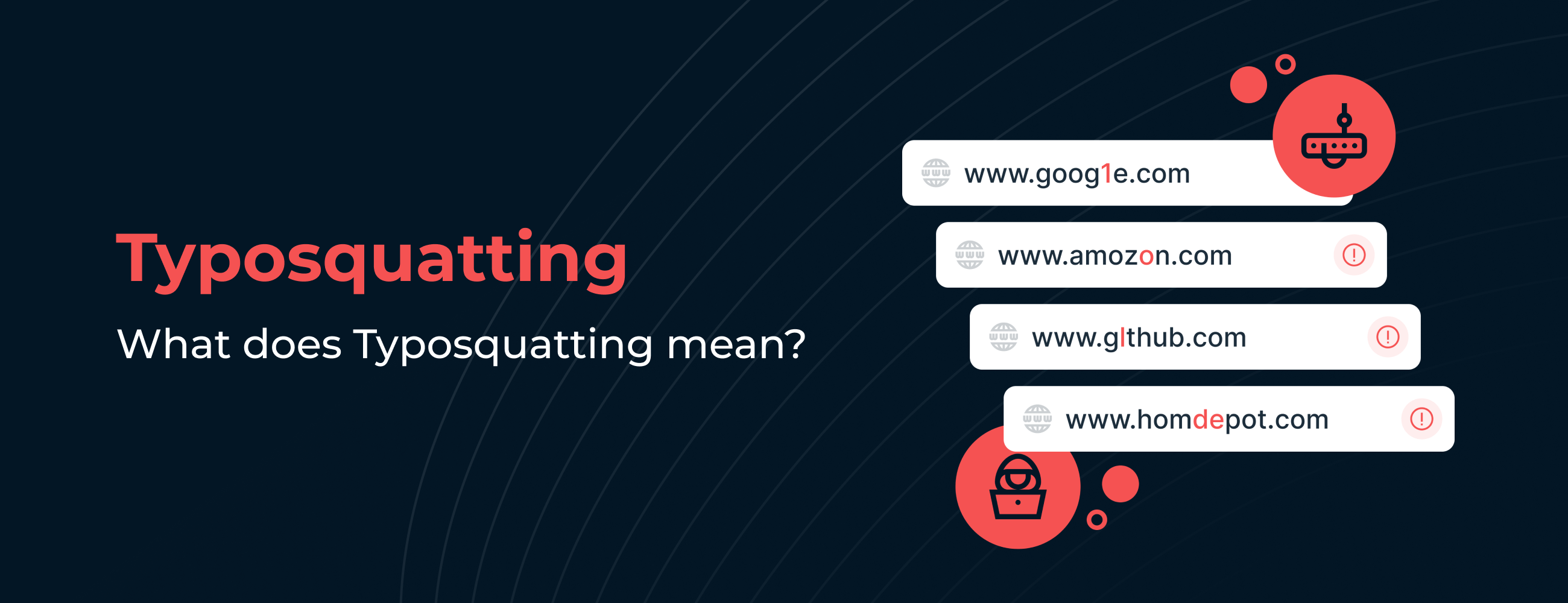
Can You Spot the Difference?
Can you see the difference between goggle.com and google.com? You probably can, but it may have taken a second or two of focused attention.
Now imagine seeing that same link inside a rushed email, a message from your “bank”, or a login page that looks perfectly familiar. No warning. No prompt. Just habit and trust. That moment of inattention is exactly what attackers rely on.
What is Typosquatting?
Typosquatting is a form of social engineering where threat actors register domain names that closely resemble legitimate ones in order to trick users into visiting malicious websites.
The goal is simple: make the victim believe they are interacting with a trusted organization such as Google, Microsoft, PayPal, or their company portal. Once fooled, the victim may:
- Enter login credentials
- Download malware
- Make fraudulent payments
- Expose sensitive personal or corporate data
Common Typosquatting Techniques
1. Character Substitution
Swapping characters that look similar.
- microsoft.com → rnicrosoft.com
- paypal.com → paypa1.com
- google.com → goog1e.com
2. Misspellings
Using common typing mistakes.
- facebook.com → faecbook.com
- instagram.com → instgram.com
- linkedin.com → linkdin.com
3. Wrong Top-Level Domain (TLD)
Changing the domain extension.
- google.com → google.co
- amazon.com → amazon.org
- paypal.com → paypal.net
4. Hyphenation
Adding dashes to make domains look official.
- google.com → google-security.com
- facebook.com → facebook-login.com
5. Extra Words or Prefixes
Adding believable terms.
- secure-google.com
- login-paypal.com
- verify-microsoft.com
Why Typosquatting Works So Well
Typosquatting succeeds because it exploits human behavior:
- We skim instead of read carefully
- We trust familiar brands
- We click quickly under pressure
- We rarely inspect URLs deeply
In security, attackers do not always break systems. They often just trick people.
How Individuals Can Protect Themselves
- Always check URLs before clicking
- Hover over links in emails
- Use password managers (they reveal fake domains)
- Enable browser phishing protection
- Never log in from email links
How Organizations Can Defend
- Register common typo domains proactively
- Use email security gateways
- Implement DMARC, SPF, and DKIM
- Train staff with phishing simulations
- Monitor for brand impersonation
Role of Governing Bodies and Registrars
- Stricter domain registration checks
- Faster takedown procedures
- Public abuse reporting platforms
- Legal consequences for repeat offenders
Final Thoughts
Typosquatting is one of the simplest cyber attacks, yet one of the most effective. No malware. No zero-day exploits. Just psychology and tiny mistakes.
In cybersecurity, the most dangerous threats are not always technical. Sometimes, all it takes is one wrong letter.

No comments yet.